From Chant to 4′33″: The Classical Music Periods, Explained

Make it practical
Try the idea while it’s fresh
“Classical music” can mean two different things. With a lowercase c, it is the enormous tradition of Western art music stretching from medieval monasteries to music written this morning. With an uppercase C, the Classical period is one compact chapter inside that story: the age of Haydn, Mozart, and young Beethoven. Knowing the periods is less about memorizing dates than learning to hear what each generation thought music was for.
Those generations did not change styles at midnight on January 1 of a convenient round year. Baroque habits survived into the Classical era; Romantic composers wrote Classical forms; Debussy, Mahler, and Stravinsky were active at the same time while imagining entirely different futures. The dates below are useful landmarks, not fences. They describe centers of gravity: where composers found patronage, which instruments they had, what audiences expected, and which musical problems felt urgent.
A listener’s map · c. 500 to today
Eight musical worlds
Dates are guides, not walls. Styles overlap, return, and develop at different speeds.
- 1Medievalc. 500–1400
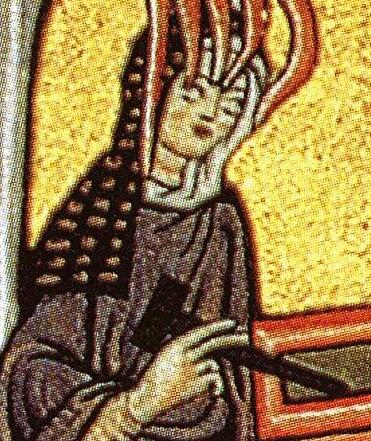
Featured voice
Hildegard of Bingen
1098–1179
A single sacred line slowly blossoms into harmony.
Ordo VirtutumO vis aeternitatisListen for: Unmetered flow, resonant spaces, voices moving as one.
- 2Renaissancec. 1400–1600
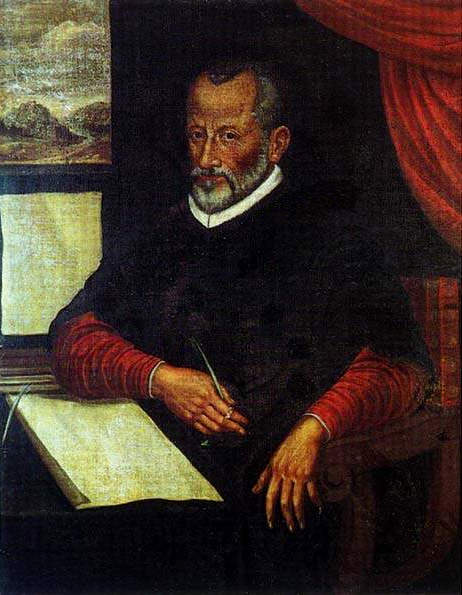
Featured voice
Giovanni P. da Palestrina
c. 1525–1594
Independent voices interlock into luminous polyphony.
Missa Papae MarcelliSicut cervusListen for: Imitation passed between voices and carefully controlled dissonance.
- 3Baroquec. 1600–1750
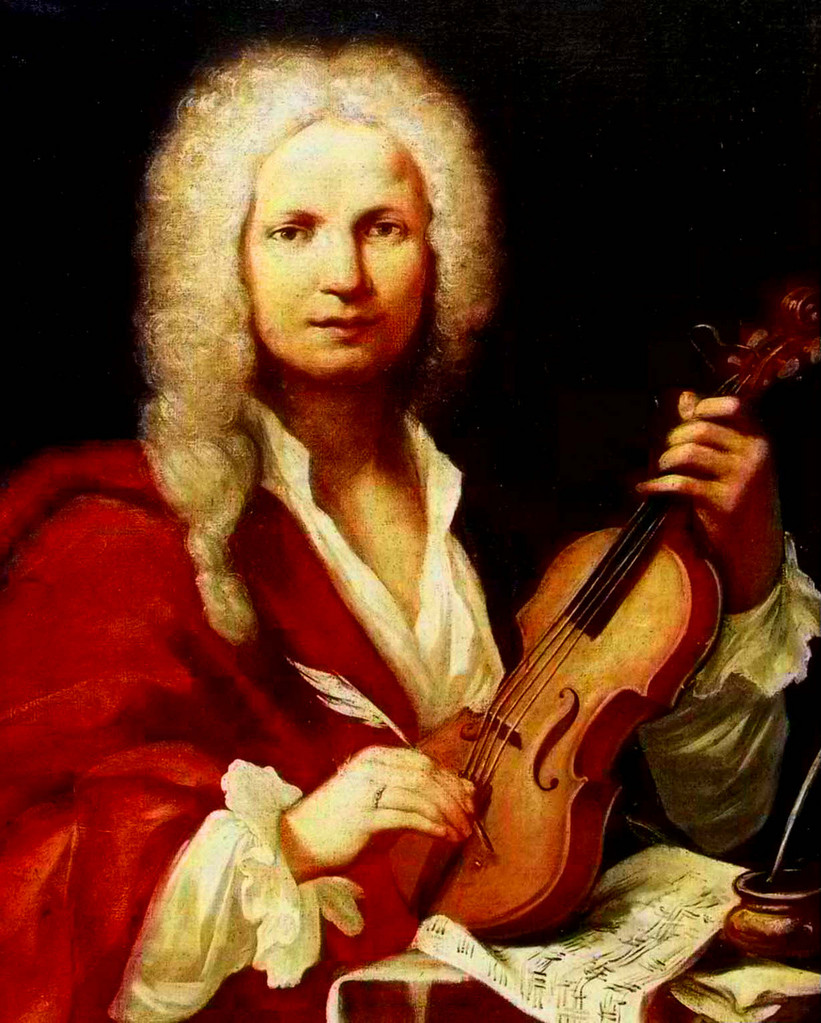
Featured voice
Antonio Vivaldi
1678–1741
Driving bass, ornament, and theatrical contrast.
The Four SeasonsGloria in D majorListen for: Sequences, a steady bass foundation, and soloist-versus-ensemble drama.
- 4Classicalc. 1750–1820
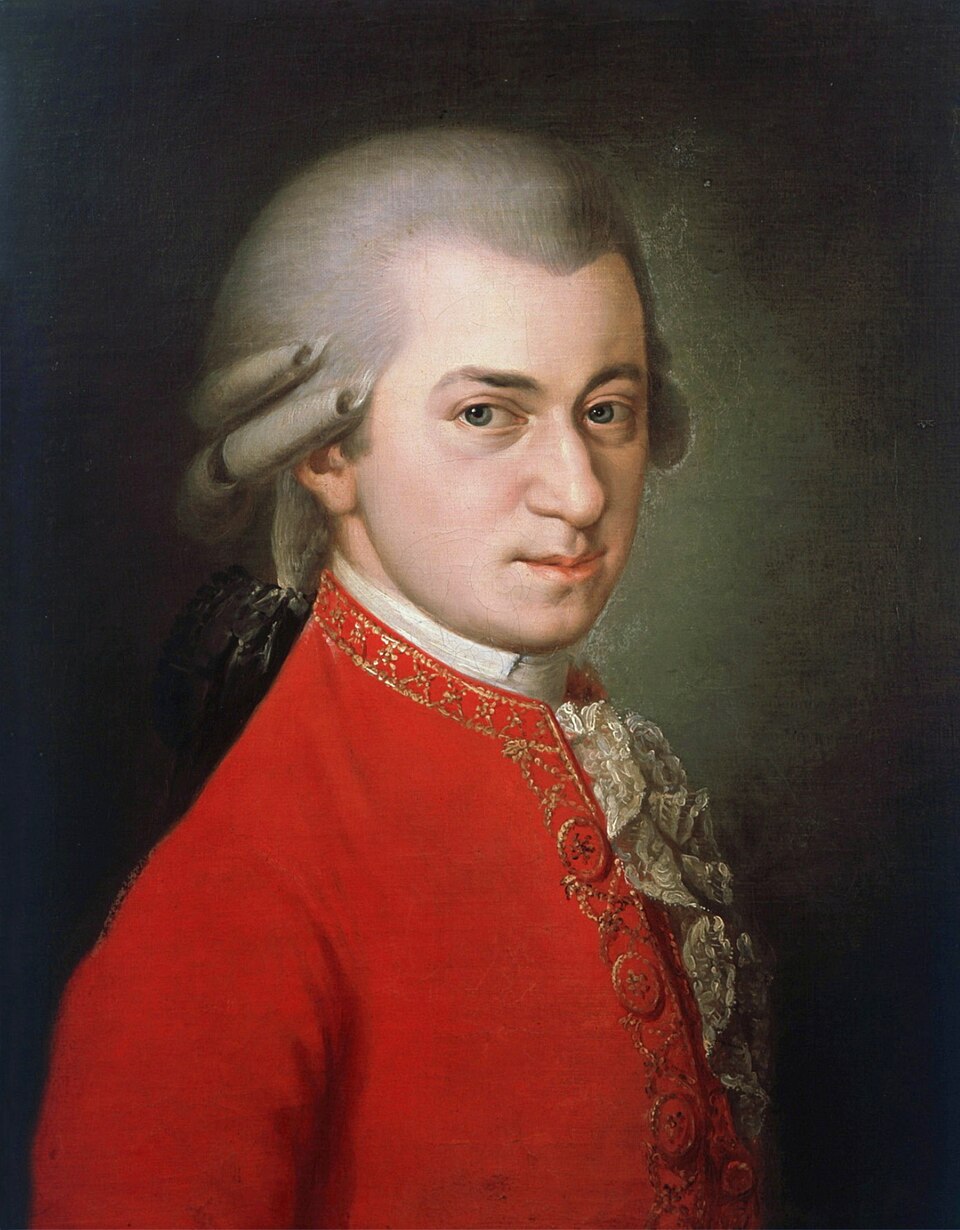
Featured voice
Wolfgang A. Mozart
1756–1791
Balanced phrases make musical argument feel conversational.
Symphony No. 40Piano Concerto No. 21Listen for: Clear themes, elegant proportion, and tension built through form.
- 5Romanticc. 1820–1900
Featured voice
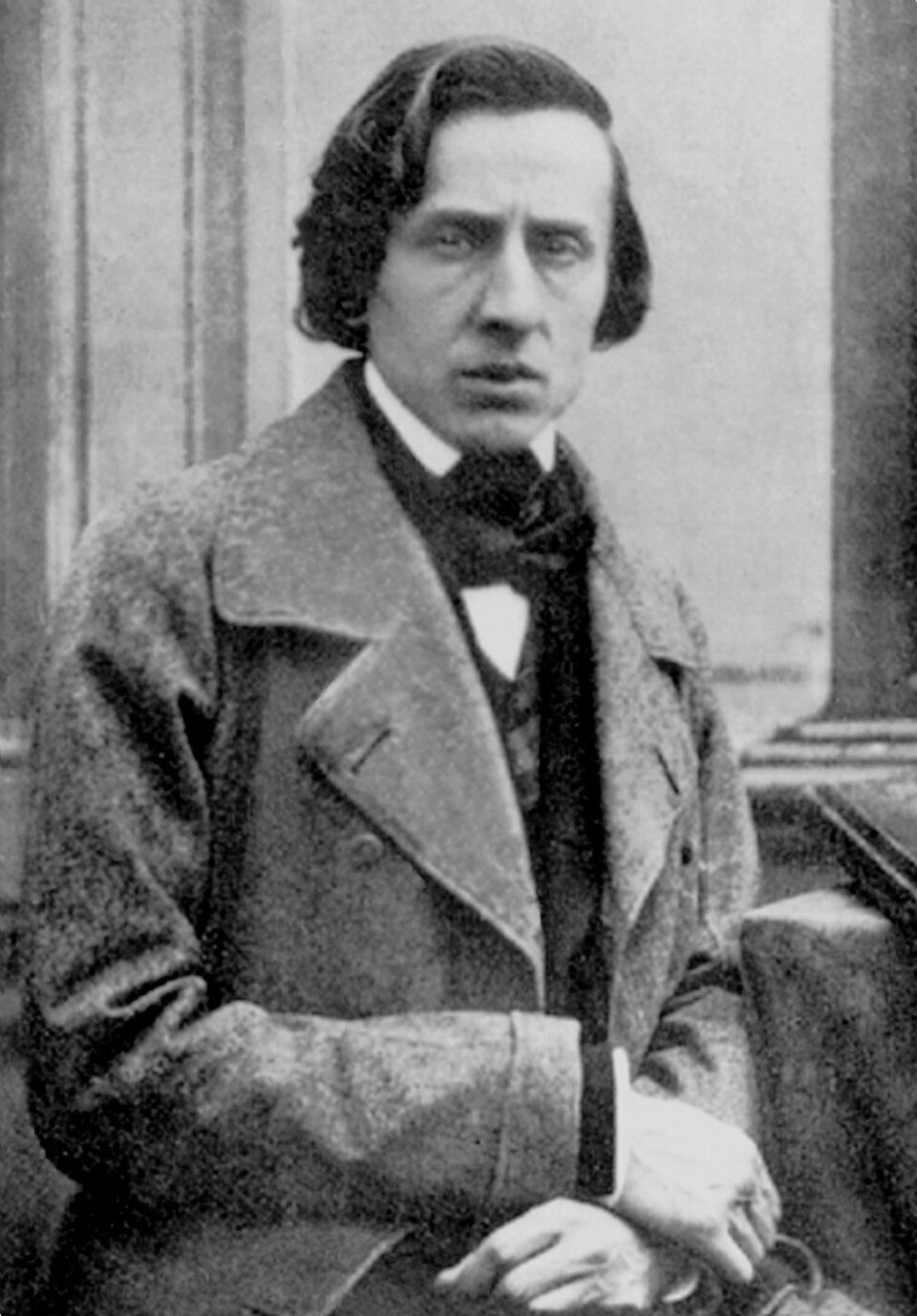
Frédéric Chopin
1810–1849
Private feeling and public spectacle stretch musical form.
Nocturne, Op. 9 No. 2Ballade No. 1Listen for: Singing melody, elastic tempo, chromatic color, and larger climaxes.
- 6Impressionistc. 1890–1920
Featured voice
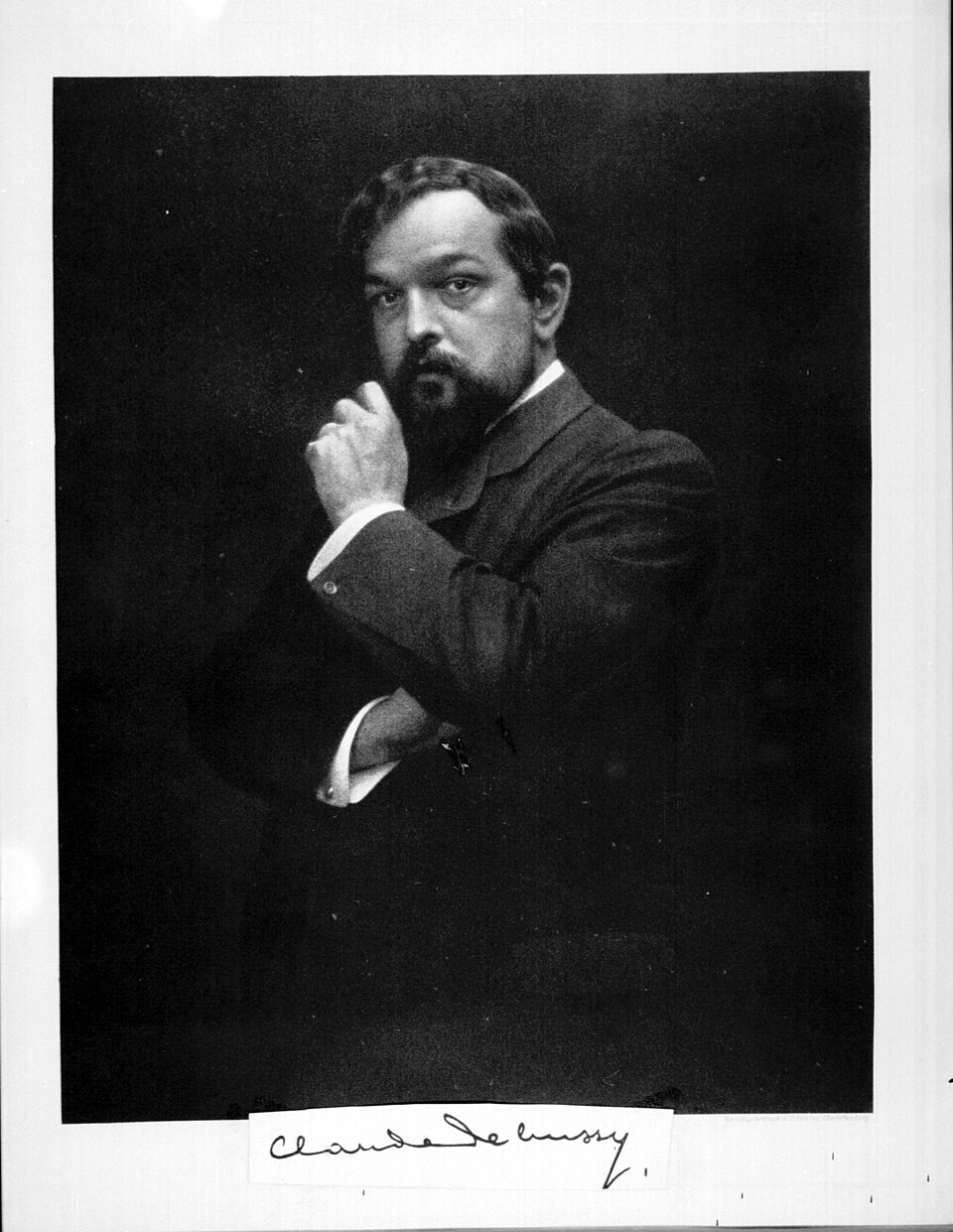
Claude Debussy
1862–1918
Harmony becomes color; timbre becomes structure.
Clair de luneLa merListen for: Whole-tone haze, parallel chords, unusual scales, and dissolving cadences.
- 7Modernistc. 1900–1945
Featured voice
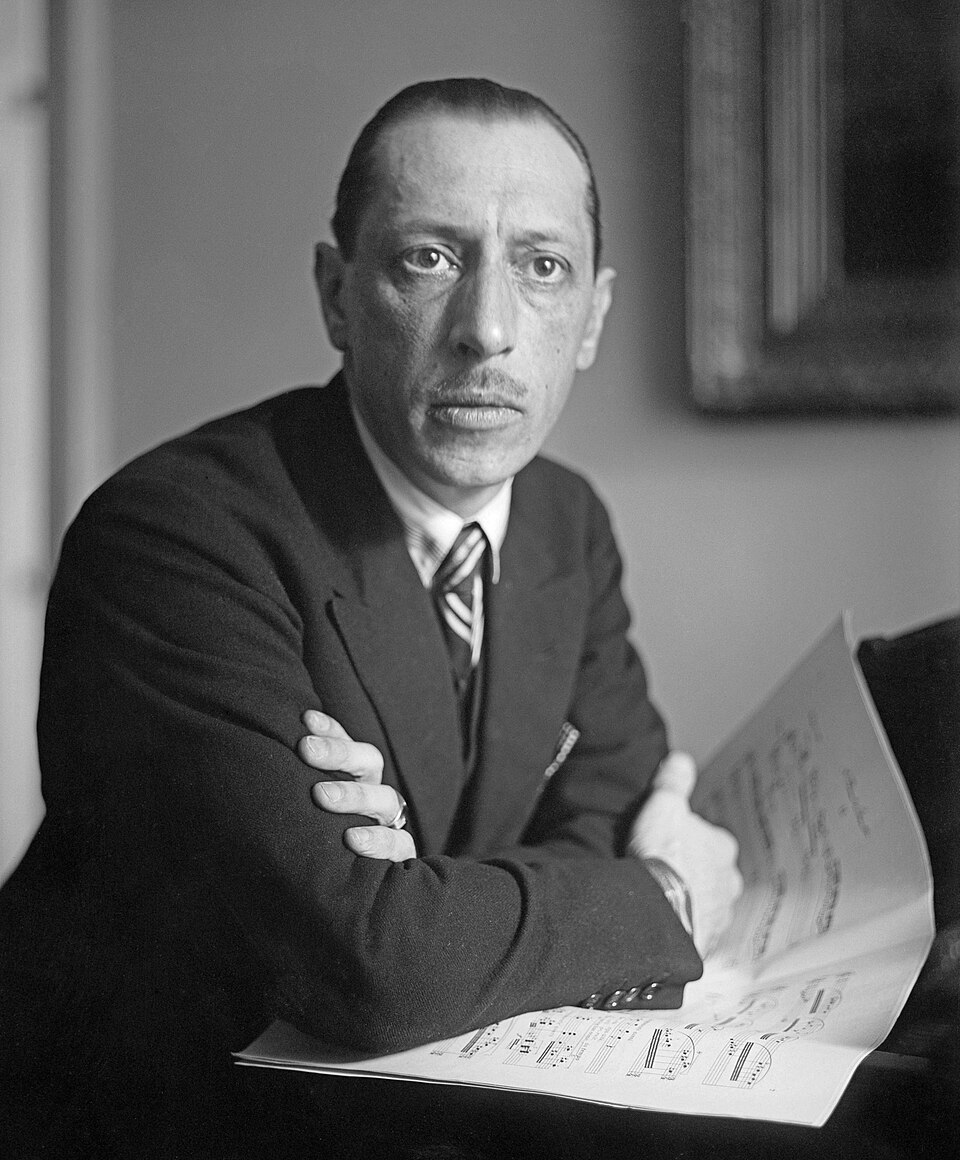
Igor Stravinsky
1882–1971
Rhythm, harmony, and form are rebuilt from the ground up.
The Rite of SpringThe FirebirdListen for: Layered meters, hard accents, blocks of sound, and deliberate friction.
- 8Contemporaryc. 1945–today
Featured voice
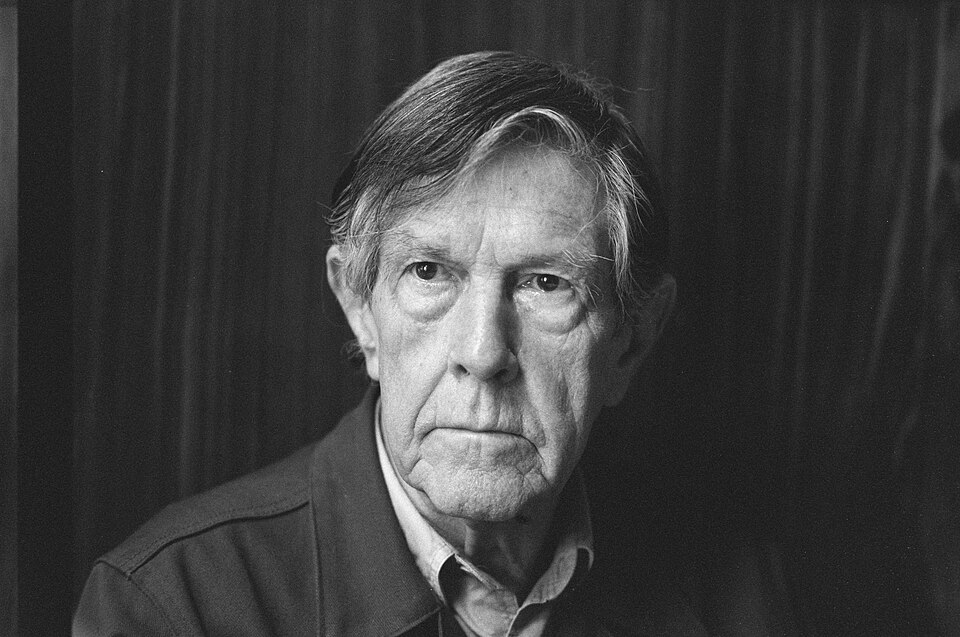
John Cage
1912–1992
No single style wins: silence, electronics, minimalism, and tonality coexist.
4′33″Sonatas and InterludesListen for: The room itself, altered instruments, process, repetition, and new technology.
.jpg)


Medieval: sound becomes something you can keep
For much of the Medieval period, roughly 500–1400, Europe’s most carefully preserved music belonged to the church. Plainchant was usually monophonic: one unaccompanied melodic line, sung collectively and shaped by the words rather than by a regular beat. Its sound is inseparable from architecture. A phrase hangs in the long reverberation of stone, and silence becomes part of its punctuation.
The era’s quiet revolution was notation. Early marks above sacred texts gradually became a system precise enough to preserve pitch and rhythm. Once music could travel on a page, composers could build structures too intricate to depend on memory alone. A second voice was added to chant, then a third and fourth; this early polyphony turned a horizontal melody into vertical harmony. Names also begin to emerge from a culture whose music often reached us anonymously.
Hildegard of Bingen (1098–1179) was a Benedictine abbess, visionary, writer, natural philosopher, and composer in the Rhineland. Her melodies often leap and soar far beyond the narrower range associated with ordinary chant. Her Ordo Virtutum, a sung drama in which the Virtues contend for a soul, is among the earliest surviving music dramas. Start with “O vis aeternitatis.” Do not wait for a chord progression; follow the contour of the single line and the way it activates the room around it.
- ·The defining texture: one sacred line, gradually expanding into early polyphony.
- ·The enabling technology: a practical system of musical notation.
- ·Also hear: Gregorian chant, Pérotin’s Viderunt omnes, and Guillaume de Machaut’s Messe de Nostre Dame.
Renaissance: many voices, one breathing organism
From about 1400 to 1600, polyphony became the central craft. A Renaissance motet may have four, five, or six independent melodies moving at once, yet the result can feel uncannily calm. Composers controlled dissonance, matched musical stress to language, and passed melodic ideas from voice to voice through imitation. Instead of melody on top with accompaniment underneath, every part participates in the design.
Music also circulated farther. Courts, chapels, and cities competed for singers and composers, while music printing in the early sixteenth century allowed repertory and style to spread at a new scale. Sacred Masses and motets remained prestigious, but secular madrigals made room for vivid word painting: rising music for “heaven,” quick notes for “running,” a sudden clash for grief. Josquin des Prez, Thomas Tallis, William Byrd, and the late-Renaissance Claudio Monteverdi reveal just how varied the era was.
Giovanni Pierluigi da Palestrina (c. 1525–1594) spent his career in Rome and became the enduring emblem of smooth sacred counterpoint. In Missa Papae Marcelli, overlapping lines remain individually graceful while important words arrive with remarkable clarity. “Sicut cervus” is an even shorter doorway into his world: listen for the opening idea entering in one voice, then another, as if ripples were widening across water.
- ·The defining texture: balanced vocal polyphony and imitation.
- ·The social shift: printed music moves beyond a single chapel or court.
- ·Also hear: Josquin’s Ave Maria…virgo serena, Byrd’s Ave verum corpus, and a Monteverdi madrigal.
Baroque: music discovers theatrical momentum
Around 1600, composers began treating a solo voice and its words as dramatic forces. Opera emerged; instrumental music gained independence; major and minor tonality hardened into the gravitational system still familiar today. A Baroque piece often rests on basso continuo, a persistent bass line realized by instruments such as harpsichord, organ, cello, or bassoon. Above it, melodies are ornamented, sequences climb or fall, and tension is intensified through contrast.
The period, roughly 1600–1750, gave us the concerto, fugue, dance suite, and mature opera. Its music likes clear oppositions: soloist against ensemble, loud against soft, one affect against another. Johann Sebastian Bach made counterpoint feel architectural; George Frideric Handel made public spectacle out of opera and oratorio; Arcangelo Corelli and others helped establish a vocabulary for strings that would shape European music for generations.
Antonio Vivaldi (1678–1741), the red-haired Venetian priest and formidable violinist, spent much of his career teaching and composing for the highly trained young women of the Ospedale della Pietà. He wrote hundreds of concertos, using recurring orchestral refrains to frame feats of solo invention. The Four Seasons is not merely four agreeable violin concertos: it is scene-painting tied to sonnets, complete with birds, storms, shivering bodies, barking dogs, and slipping feet. Hear the first movement of “Winter” and notice how repeated notes create cold before the soloist has said a word.
Vivaldi’s fame faded late in his life, and he died in Vienna in 1741. His music then spent generations outside the mainstream before a twentieth-century revival. That arc is a useful warning: the repertory we now call inevitable was selected, forgotten, edited, and rediscovered by history.
- ·The defining engine: basso continuo, functional tonality, sequence, and contrast.
- ·The new public drama: opera and the virtuoso concerto.
- ·Also hear: Bach’s Brandenburg Concerto No. 3, Handel’s Messiah, and Purcell’s Dido and Aeneas.
Classical: proportion becomes drama
The Classical period, conventionally about 1750–1820, replaced much of the Baroque’s dense surface with clarity. Melodies became more songlike, phrases often answered one another in balanced units, and accompaniment moved into the background. But “clear” does not mean emotionally pale. Classical composers learned to create long-range suspense from proportion itself: introduce contrasting themes, move them through unstable keys, then make their return feel earned.
This is the age in which the symphony, string quartet, and sonata became central public forms. The piano displaced the harpsichord because it could shape dynamics through touch. Orchestras grew more standardized, and ticketed concerts gradually widened the audience beyond church and aristocratic court. Joseph Haydn spent decades refining musical wit and conversation; Ludwig van Beethoven inherited those structures, then pushed them toward Romantic scale and intensity.
Wolfgang Amadeus Mozart (1756–1791) toured Europe as a child prodigy, worked under the constraints of court employment in Salzburg, and pursued a more independent career in Vienna. He could make the conventions of his day sound spontaneous: an elegant theme turns operatic, a joke opens into grief, a formal cadence is delayed by one perfectly judged phrase. Symphony No. 40 shows how agitation can inhabit Classical balance; Piano Concerto No. 21 makes dialogue between soloist and orchestra feel effortless. Mozart died at thirty-five, leaving his Requiem unfinished.
- ·The defining ideal: intelligible form, balanced phrases, and thematic development.
- ·The essential forms: symphony, sonata, concerto, and string quartet.
- ·Also hear: Haydn’s “Joke” Quartet, Mozart’s The Marriage of Figaro, and Beethoven’s Symphony No. 5.
Romantic: the inner life moves onto the stage
From roughly 1820 to 1900, composers expanded music’s emotional and narrative range. The Romantic century valued the singular voice: the artist as confessor, visionary, virtuoso, nationalist, or outsider. Harmony became more chromatic, tempos more flexible, and climaxes larger. Some works attached themselves to poems, paintings, landscapes, myths, and political identity; others argued that instrumental music needed no story beyond its own logic.
The era moved in two directions at once. Berlioz, Wagner, Verdi, Tchaikovsky, and Mahler filled theaters and concert halls with enlarged orchestras and sweeping time spans. Meanwhile, the growing middle class brought pianos into homes, making the song, miniature, nocturne, and character piece central forms of private music-making. The public virtuoso and the intimate parlor were products of the same musical economy.
Frédéric Chopin (1810–1849) grew up in Warsaw and settled in Paris in 1831. He disliked the life of the touring showman and built his reputation through salons, composition, and teaching. Nearly his entire mature voice runs through the piano, whose hammers he made sing through ornament, pedaling, and rubato. Polish dances such as the mazurka and polonaise became carriers of memory and identity. Begin with the Nocturne in E-flat major, Op. 9 No. 2, then hear Ballade No. 1 for the larger architecture. Chopin died at thirty-nine, but in those compressed years he permanently changed how pianists imagine touch and time.
- ·The defining value: individual expression, whether intimate or monumental.
- ·The expanding palette: richer chromatic harmony, larger orchestras, and flexible tempo.
- ·Also hear: Clara Schumann’s Piano Trio, Berlioz’s Symphonie fantastique, and Brahms’s Symphony No. 4.
Impressionism: harmony turns into light
“Impressionist” is a contested label, better understood as a movement centered in France around 1890–1920 than as a universal period. The analogy with painting is useful if kept precise: this music often cares less about a chord’s destination than its immediate color. Whole-tone and pentatonic scales weaken familiar gravitational pulls; parallel chords move as blocks of sonority; unusual instrumental combinations bring foreground and atmosphere into question.
Claude Debussy (1862–1918) studied at the Paris Conservatoire and won the Prix de Rome, yet his mature music continually slipped free of academic expectations. Prélude à l’après-midi d’un faune opens with a flute line that seems to invent its own air and time. La mer makes orchestral color behave like changing water rather than a literal seascape. “Clair de lune,” the familiar piano miniature, repays close listening: its beauty comes not from vagueness but from exact voicing, register, and harmonic timing.
Maurice Ravel shares the coloristic vocabulary but often reveals a sharper mechanical precision. Elsewhere, composers as different as Alexander Scriabin and Lili Boulanger explored harmony and timbre beyond conventional Romantic syntax. The movement does not abandon form; it lets resonance, color, and pacing do structural work that a listener might once have expected from cadence alone.
- ·The defining question: what if a sonority can be valued for its color, not only where it leads?
- ·The expanded materials: modes, whole-tone and pentatonic scales, parallel chords, and finely divided timbre.
- ·Also hear: Ravel’s Daphnis et Chloé, Debussy’s La mer, and Lili Boulanger’s D’un matin de printemps.
Modernism: one musical language becomes many
Modernism overlaps both late Romanticism and Impressionism, especially from about 1900 to 1945. What unites it is not a sound but a pressure to remake inherited language. Arnold Schoenberg loosened and eventually abandoned a stable tonal center, then organized all twelve pitches through serial methods. Béla Bartók fused close study of folk music with radical rhythm and harmony. Neoclassicists revisited older forms with new edges. Jazz, industry, recording, global encounters, and two world wars all changed what modern music could absorb.
Igor Stravinsky (1882–1971) is almost a timeline by himself. Born in Russia, he reached international attention through ballets written for Serge Diaghilev’s Ballets Russes in Paris, then lived in Switzerland, France, and the United States. The Firebird retains sumptuous late-Romantic magic; The Rite of Spring, premiered in 1913, turns irregular accents, repeating cells, and layered keys into physical force. Its first audience reacted noisily, though the familiar story of a pure “riot over the music” is tidier than the evidence.
Stravinsky later pivoted toward lean neoclassicism and, still later, serial techniques. That refusal to remain a single kind of composer captures Modernism’s real character. There was no one replacement for Romantic language. There were competing answers: atonality, expanded tonality, folk modernism, machine rhythm, new objectivity, and deliberate returns to the past.
- ·The defining condition: shared rules fracture into competing systems.
- ·The rhythmic revolution: meter and accent become as disruptive as harmony.
- ·Also hear: Schoenberg’s Pierrot lunaire, Bartók’s Music for Strings, Percussion and Celesta, and Florence Price’s Symphony No. 3.
Postwar and contemporary: everything is available
After 1945, it becomes increasingly misleading to draw a single arrow. Total serialism organized multiple musical parameters; electronic studios made sound itself editable; minimalism built enormous spans from repetition and gradual process; spectral composers treated the overtone series as raw material; others renewed tonality, improvisation, theatrical performance, or traditions excluded from the old canon. Film, television, games, amplified instruments, and digital production became part of the art-music ecosystem.
John Cage (1912–1992) asked a foundational question: what happens when composing means framing attention rather than filling time with chosen notes? He transformed the piano into a miniature percussion ensemble by placing objects among its strings. In 4′33″, first performed in 1952, the player makes no intentional instrumental sound through three timed movements. The piece does not offer four and a half minutes of nothing. It makes the coughs, ventilation, traffic, shifting bodies, and expectation in the room impossible to ignore.
Cage is one path, not the destination. Steve Reich and Philip Glass explored audible process and repetition; Kaija Saariaho shaped form through timbre and electronics; composers including Caroline Shaw, Thomas Adès, Unsuk Chin, and Jessie Montgomery move among concert tradition, vernacular music, technology, and historical reference. “Contemporary” therefore names an ecosystem, not a house style. A piece written today may be tonal, noisy, algorithmic, theatrical, meditative, or all of those in one evening.
- ·The defining fact: no single technique, institution, or audience controls the field.
- ·The expanded instrument: electronics, recorded sound, silence, space, and the performance situation itself.
- ·Also hear: Cage’s Sonatas and Interludes, Reich’s Music for 18 Musicians, and Saariaho’s Graal théâtre.
What actually changed across 1,500 years?
The shortest useful history is not a list of famous names. It is a set of changing relationships. Follow these six threads and the periods stop feeling like disconnected rooms:
- ·Texture: a single chant line becomes Renaissance polyphony, Baroque melody-and-bass, Classical conversation, Romantic mass, and modern layers.
- ·Harmony: modal practice gradually yields to major-minor tonality; chromaticism stretches it; Impressionism blurs it; Modernism offers multiple alternatives.
- ·Time: speech-shaped chant gives way to measured counterpoint, Baroque pulse, Classical proportion, Romantic flexibility, and modern experiments with rhythm and duration.
- ·Color: voices dominate early repertory; instrumental families grow more specialized; the orchestra expands; electronics eventually make any sound usable.
- ·Audience and money: monastery, church, and court are joined by opera house, ticketed concert, publisher, middle-class home, university, record label, film studio, and online listener.
- ·The composer’s role: servant, craftsperson, public celebrity, private confessor, researcher, provocateur, producer, and collaborator all become possible identities.
A period is easiest to hear as a new answer to an old question: what can music organize, express, and make us notice?
A 45-minute tour: hear the timeline move
Read less and compare more. Queue these in order, using one movement or a representative excerpt where the complete work is longer. Keep the volume comfortable and leave a few seconds of silence between tracks. Your ear will notice the historical changes before you can name them.
- ·Hildegard of Bingen — O vis aeternitatis: follow one long, unaccompanied line.
- ·Palestrina — Sicut cervus: hear the same idea ripple through several equal voices.
- ·Vivaldi — “Winter,” first movement, from The Four Seasons: feel repetition turn into physical weather.
- ·Mozart — Symphony No. 40, first movement: track a clear theme through conflict, departure, and return.
- ·Chopin — Nocturne in E-flat major, Op. 9 No. 2: hear a piano imitate breath and singing.
- ·Debussy — Prélude à l’après-midi d’un faune: notice how color delays the need to arrive.
- ·Stravinsky — “Augurs of Spring” from The Rite of Spring: try counting the accents, then surrender to them.
- ·John Cage — 4′33″: listen to the performance made by the room you are in.
Take this with you
When a piece feels opaque, ask only three questions: What is in the foreground? What keeps repeating? What counts as arrival? Those questions work from plainchant to spectral music.
Turn the history into something you can hear
Period labels become useful when they sharpen perception. Baroque sequences become easier to recognize once you can hear intervals; Classical form becomes clearer when you feel a return to the home key; Romantic and Impressionist harmony becomes less mysterious once chord color has names. Use the tools below while you listen, and the timeline stops being trivia.
Train interval and chord recognition in the Ear TrainerSee how keys and harmonic gravity connectExplore the piano as the repertory’s central instrumentSources and further reading
- Library of Congress — Music appreciation: history
- The Metropolitan Museum of Art — Music in the Renaissance
- The Metropolitan Museum of Art — Nineteenth-Century Classical Music
- Encyclopaedia Britannica — Antonio Vivaldi
- Boston Symphony Orchestra — Mozart’s Requiem
- Fryderyk Chopin Institute — Biography
- Library of Congress — Robert Craft Collection on Igor Stravinsky
- Library of Congress — The Rite of Spring
- John Cage Trust — Autobiographical statement
Make it practical